
Introduction
When Jesus Christ Was Born (The Birth Date of Jesus Christ) – is not just a question of the calendar 📆.
Table Of Content
- Introduction
- Why this matters not only to believers but also to historians, cultural scholars, and researchers 🕵
- Quick Overview: The Tradition of December 25 and Other Theories
- Where Jesus Christ Was Born: Geography, History, and Significance
- Where Was Jesus Born?
- The City Where Jesus Was Born – Bethlehem: Biblical and Archaeological Evidence
- Where Was Jesus Christ Born: The Country and the Political Map of Judea at That Time
- Why Bethlehem? The Prophecy of Micah and the Lineage of David
- Geography of Bethlehem in the First Century: A Place for Shepherds, Not for Kings
- Practical Takeaways
- When Was Jesus Born: What the Bible, Historians, and Astronomers Say 🔭
- What Day Was Jesus Born: Was It Really December 25?
- Historical Clues: From the Census to the Reign of Herod
- Who Was King of Judea When Jesus Was Born? – Herod the Great and His Role
- Astronomical Theories: The Star of Bethlehem, Jupiter, Saturn, and 7 BC
- Why is the date of birth not directly mentioned in the Gospels?
- How Jesus Christ Was Born: The Biblical Account and Details
- How Jesus Christ Was Born: Simplicity, Poverty, and Spiritual Depth
- The Circumstances of Jesus’ Birth: The Stable, the Manger, the Lack of Room at the Inn
- Shepherds, Angels, and the Star of Bethlehem: Symbolism and Reality
- The Role of the Virgin Mary: Trust, Humility, and Motherhood
- How Old Was Joseph? Biblical Hints and Apocryphal Sources
- When Was Jesus Christ Really Born? Alternative Theories
- Comparison of Possible Seasons for Jesus’ Birth
- Why December 25 Became the Official Date 📅
- The Perspective of Eastern Churches: January 6–7 and Other Traditions
- The Question of Calendars: Julian, Gregorian, and the Difference in Calculations
- Does the Exact Date Matter? A Theological Reflection
- Context: The World into Which Jesus Was Born
- The Political Situation in Israel and the Roman Empire
- Jewish Society: Social Conditions and Messianic Expectations
- Why Jesus’ Birth in Poverty Is a Deep Message for All Time
- The Role of Jerusalem, Nazareth, and Bethlehem in the Story of the Birth
- Spiritual Meanings of the Birth of Jesus
- What “God With Us” Means – The Name Emmanuel
- The Birth of Jesus as Light ☀️ in the Darkness: A Biblical Metaphor in Modern Times
- Christ as Shepherd, Not a Palace King: A Deep Contrast
- Why Jesus Was Born This Way and at That Time – The Divine Design
- The Birth of Jesus Today: How to Experience Christmas More Deeply
- How to celebrate not just the tradition, but the true significance
- What Is the Essence of Christmas?
- Practical Steps: Bible Reading 📖, Prayer, Sharing with Others
- Christmas as the Beginning of a Spiritual Journey
- Conclusion: Let This Christmas Be Special
- Sources, Research, and Further Reading
- The Gospels 🕊️ of Matthew and Luke – Comparative Analysis
- Historical Texts 📜: What Did Eyewitnesses of the Time Write?
- Astronomical and Scientific Research
- A Gentle Conclusion
- Conclusion: Is the Exact Date That Important?
- Why does the question of the date 📅 draw so much attention?
- The key 💡 is not when, but Who and why
- How can the birth ❤️ of Jesus touch you personally?
- Comparison Table: Date vs. Meaning
- An Invitation That Still Speaks Today
It is one of the most well-known yet least precisely documented events in human history.
The Bible does not specify an exact day or month for Jesus’ birth.
This naturally raises many questions: why December 25, is it the real date, and does it even matter?
For many, it is important to know where and when the life of the One who became the central figure of faith for millions began.
This is not mere curiosity – it’s a search for connection with the real Jesus, who was not only the Son of God but also a historical person.
People want to see Him not only in icons but in a specific place and time – as a Child who truly entered this world 🌎.
Why this matters not only to believers but also to historians, cultural scholars, and researchers 🕵
Jesus Christ is not a fictional figure.
His existence is acknowledged not only by believers but also by numerous independent historical sources, including Roman and Jewish records.
For historians, chronological accuracy matters, as it allows the birth of Jesus to be connected with real events: a population census, Herod’s reign, astronomical phenomena.
Cultural scholars explore how the birth date of Jesus influenced the development of Christmas traditions, imagery in art, literature 📚, music 🎼, and even the customs of entire nations.
Establishing a specific date lays the foundation for holiday calendars, liturgical cycles, theatrical productions, and musical 🎶 works.
For theologians and biblical scholars, it is a key 🗝️ to a deeper understanding of the biblical text and the context of the events described in the Gospels.
An exact date helps show that the birth of Jesus was not a myth, but an event that occurred in the real world, among real people, under specific historical conditions.
Quick Overview: The Tradition of December 25 and Other Theories
In most countries, Christmas is celebrated on December 25.
This date was fixed in the 4th century when the Roman Church officially chose it as the day to commemorate the birth of Jesus.
The reason was to contrast the Christian light with the pagan celebration of “Dies Natalis Solis Invicti” (Birthday of the Unconquered Sun), which fell on the same day.
The image of Jesus as the Light ☀️ of the world fit perfectly into this substitution.
However, many scholars note that Jesus was unlikely to have been born in December ❄️.
For example:
- The shepherds were in the fields with their flocks 🐑, which is rare in December in the Judean climate;
- The Gospel of Luke mentions a census, which would more likely take place in a warmer season 🌿.
There are theories that Jesus may have been born in the fall 🍂 (September-October) or in the spring 🌸 (March-April).
Some researchers connect this with astronomical events, particularly a rare alignment of Jupiter and Saturn in 7 BC, which could have been the “star” ✨ seen by the Magi.
There is also the Eastern tradition – January 6 or 7 – still observed in many Orthodox countries.
It is based on the Julian calendar, which lags 13 days behind the Gregorian calendar.
Practical Insight: Christmas is not about the date, but about the Meaning – Jesus was born and comes into your life with hope, light ☀️, and renewal.
Where Jesus Christ Was Born: Geography, History, and Significance

Where Was Jesus Born?
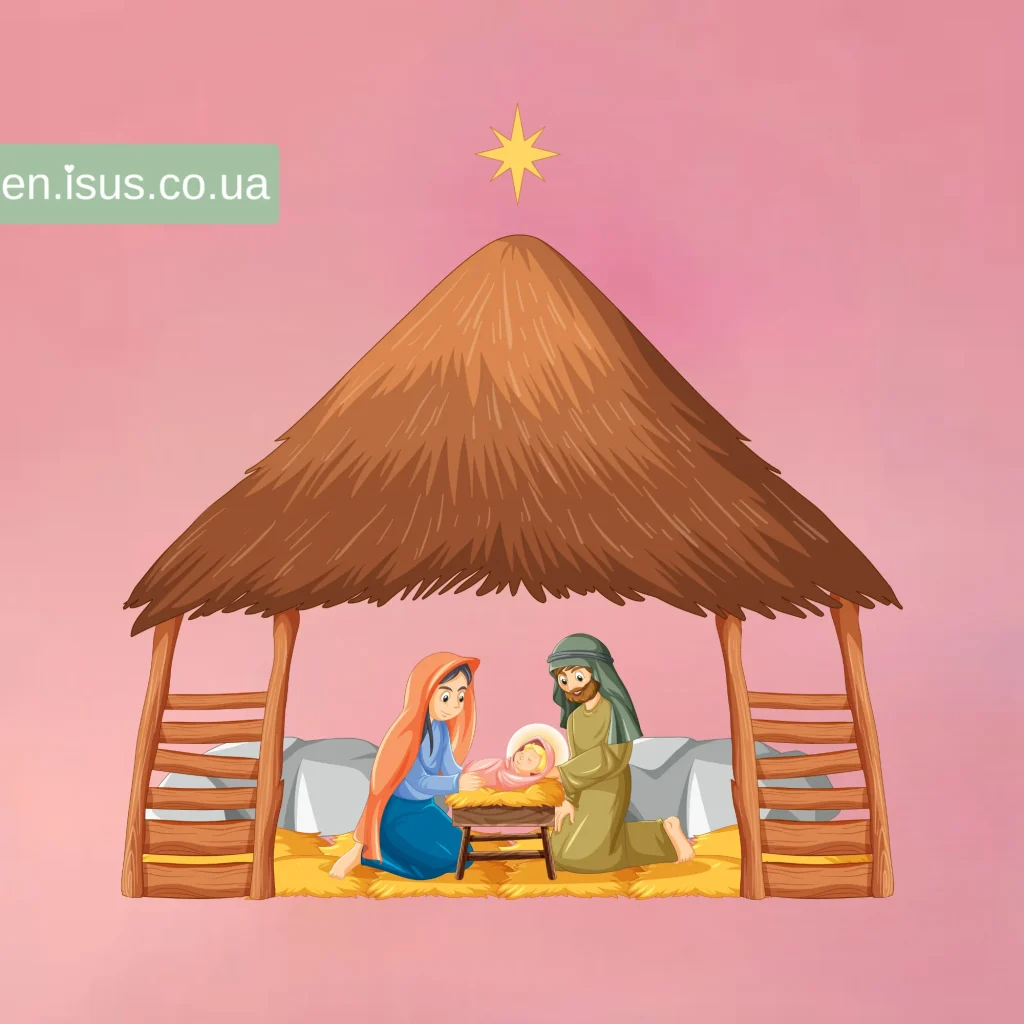
Jesus Christ was born in Bethlehem, a small town southwest of Jerusalem.
It was not a major center or a capital city – just a humble place where ordinary people lived.
It was precisely in such a modest, unremarkable location that God chose to enter the world.
The City Where Jesus Was Born – Bethlehem: Biblical and Archaeological Evidence
The Bible clearly states in the Gospels of Matthew (2:1) and Luke (2:4-7) that Jesus was born in Bethlehem.
This town is also mentioned in Old Testament prophecies – especially in the book of the prophet Micah (5:2), which says: “But you, Bethlehem Ephrathah, though you are small among the clans of Judah, out of you will come for me one who will be ruler over Israel…”
Archaeologists confirm that Bethlehem indeed existed during that time and had a typical rural layout for Judea 🛖.
The town contained caves that were used as homes or stables 🐎 – and according to tradition, Jesus was born in one of these caves.
Where Was Jesus Christ Born: The Country and the Political Map of Judea at That Time
At the time of Jesus’ birth, the land where He was born was part of the Roman Empire.
Formally, it was the province of Judea, under the authority of Roman Emperor Octavian Augustus.
The local king, appointed by Rome, was Herod the Great.
He was ruling Judea when Jesus was born and ordered the massacre of infants 👶 in Bethlehem (Matthew 2:16).
Thus, Jesus was born in a real country, in a specific historical context, during a time of harsh rule and political instability.
Why Bethlehem? The Prophecy of Micah and the Lineage of David
Bethlehem was not a random location.
It was the hometown of King David and the place where he was anointed as king.
Jesus, being a descendant of David, had to be born in the same town – a key confirmation of the Messianic prophecies.
The Gospel of Luke explains that Joseph and Mary came to Bethlehem because of a census ordered by the Roman authorities.
Joseph was “of the house and lineage of David,” and so he was required to register in Bethlehem.
God even used the emperor’s decree to fulfill His prophetic Word.
Geography of Bethlehem in the First Century: A Place for Shepherds, Not for Kings

Bethlehem in the first century was not a city of palaces and trade, but a land of shepherds, rural folk, and simple craftsmen.
It was a hilly 🗻 region with numerous caves, often used to shelter livestock 🐏.
And it was into this simple, unprotected world that Jesus was born – not in a castle, not in a capital city, not in royal halls, but among animals, in the stillness of night, surrounded by the love ❤️ of His earthly family and the heavenly glory of angels.
This is not merely a story about a place – it’s a message:
- God chooses the simple to accomplish the great
- He comes into the heart of anyone ready to receive Him – regardless of status or circumstance
Practical Takeaways
- Jesus was born in Bethlehem, but He can be born in your heart – today
- If God used a census and a journey from Nazareth to Bethlehem to fulfill His plan, your journey matters too, even if it feels difficult
- The simplicity of Jesus’s birthplace teaches us not to look for God only in the extraordinary – look for Him in the ordinary
When Was Jesus Born: What the Bible, Historians, and Astronomers Say 🔭
The Bible does not state the exact date of Jesus Christ’s birth, but it offers some important clues.
The Gospel of Luke mentions that Jesus was born during a census when Quirinius was governor of Syria (Luke 2:2).
The Gospel of Matthew states that Jesus was born during the reign of King Herod the Great (Matt. 2:1).
These historical references are key to estimating the actual date.
What Day Was Jesus Born: Was It Really December 25?
The date of December 25 first appeared in Christian tradition in the 4th century when the church in Rome began celebrating Christmas on this day.
Some believe this date was chosen symbolically in response to the pagan feast “The Birth of the Sun,” which coincided with the winter solstice.
The Gospels do not mention a specific date – not a day, not a month.
However, the detail about shepherds staying in the fields at night 🌾 (Luke 2:8) suggests it may not have been winter 🥶 but a warmer season – perhaps spring 🌷 or autumn 🍁.
Historical Clues: From the Census to the Reign of Herod
The census mentioned in Luke aligns with one of the periodic Roman censuses.
Quirinius officially became governor of Syria around 6 AD, but some sources suggest he may have had an earlier administrative role.
Meanwhile, historians agree that Herod the Great died in 4 BC.
This means that Jesus must have been born before 4 BC – most likely between 7 and 5 BC.
Who Was King of Judea When Jesus Was Born? – Herod the Great and His Role
The king of Judea when Jesus was born was Herod the Great.
He was a ruler appointed by Rome, known for his cruelty and paranoid suspicion.
He is the one who ordered the killing of infants in Bethlehem in an attempt to eliminate the newborn “King of the Jews” (Matt. 2:16).
This confirms that Jesus’s birth occurred before Herod’s death – that is, no later than 4 BC.
Astronomical Theories: The Star of Bethlehem, Jupiter, Saturn, and 7 BC

Many scholars and astronomers have studied the phenomenon of the Star of Bethlehem, which was seen by the wise men from the East.
One of the most common explanations is a striking astronomical conjunction of Jupiter and Saturn in the constellation Pisces 🐠, which occurred in 7 BC.
This event was bright, lasted several months, and could have been perceived as a “sign in the sky” ✨.
Other events such as comets ☄️ or supernovae are also mentioned, but this conjunction best matches the biblical description.
Why is the date of birth not directly mentioned in the Gospels?
The evangelists did not aim to create a chronological biography of Jesus.
Their main goal was to testify to His mission, life, death, and resurrection.
What mattered to them was not when Jesus was born, but who He is.
The Gospels focus on the meaning: the Savior came into the world not in luxury, but in poverty; not at the center of power, but in a small town; not with triumph, but with silence – to be accessible to everyone.
The date was not critical for their readers, because the truth lies not in the number, but in the event that changed all of humanity.
What matters most is not the date, but the fact that Jesus truly came. And He is not in the past but in every heart 🤍 that receives Him.
How Jesus Christ Was Born: The Biblical Account and Details
The birth of Jesus Christ is an event that changed the course of history.
At the same time, it is a tender, quiet story filled with deep meaning.
Not in a palace, not amid wealth, but in a stable, among hay 🌾 and animals 🐑, in an ordinary family that simply trusted God.
That is the true strength and beauty of Christmas.
How Jesus Christ Was Born: Simplicity, Poverty, and Spiritual Depth
Jesus was born not in luxury, but in poverty.
He – the Son of God – entered this world through a teenage mother engaged to Joseph, a carpenter.
At that time, Mary was pregnant not by her husband, but by the Holy Spirit (Luke 1:35).
It was an incredible miracle that required immense trust from Mary.
Jesus came into the world not in a warm home but in a temporary shelter for livestock 🐄 because there was no room at the inn (Luke 2:7).
Being born in a stable marked the beginning of His journey – humble and close to ordinary people.
This simplicity was not accidental.
God deliberately chose the most modest conditions to show: His love is for everyone, not just the rich or powerful.
The Circumstances of Jesus’ Birth: The Stable, the Manger, the Lack of Room at the Inn
When Mary and Joseph arrived in Bethlehem due to a census decree (Luke 2:1-4), all the lodging places were already full.
They had to stay in a stable – a place where animals were kept.
There, among hay and the smell of livestock, was born the One whom angels called the Savior of the world.
His first crib was a wooden manger, a feeding trough for animals.
This is not just a household detail.
It is a symbol: Jesus came to nourish a spiritually hungry earth, to become the Bread 🍞 of Life for everyone.
Shepherds, Angels, and the Star of Bethlehem: Symbolism and Reality
The first to learn about Jesus’ birth were shepherds (Luke 2:8-16) – the lowest social class of that time.
An angel appeared to them at night and announced the joyful news.
This is no coincidence: God speaks not to the powerful of this world, but to those who listen with their hearts.
The Star of Bethlehem (Matthew 2:1-10), which guided the wise men from the East, is also a real symbol.
Many astronomers believe it may have been a rare planetary conjunction of Jupiter and Saturn in 7 BC.
But the main thing is not the mechanism, but the message: God leads those who seek – even from afar.
The Role of the Virgin Mary: Trust, Humility, and Motherhood
Mary is an example of the most tender and courageous trust.
She did not simply agree to become the mother of the Savior.
She said, “Let it be to me according to your word” (Luke 1:38) – even without fully understanding what lay ahead.
She carried Jesus in her womb, gave birth to Him among hay, cared for Him when no one yet saw in Him the Messiah.
Her path is that of an ordinary woman who became a part of God’s extraordinary story.
And her heart 💛 – full of gentleness, silence, and strength – teaches us to love, to trust, and to remain faithful.
How Old Was Joseph? Biblical Hints and Apocryphal Sources
The Bible does not state Joseph’s age directly, but church tradition offers two main versions.
The apocryphal “Protoevangelium of James” describes Joseph as an elderly widower with children.
Other sources consider him younger, still strong, able to work and travel with his family 🧑🧑🧒🧒.
What matters most is his character: Joseph was just, gentle, obedient to God.
He accepted Mary with love, did not fear responsibility, and protected and supported his family in the hardest moments.
He is an example of a man who does not seek fame, but simply and quietly does what is right.
This story is not only about the past.
It is about a heart that today is ready to welcome Jesus – even into the “stable” of one’s life, amid disorder, simplicity, and everyday life.
Because that is exactly where He comes – quietly, gently, with a love that changes everything.
When Was Jesus Christ Really Born? Alternative Theories
The exact date of Jesus Christ’s birth has no definitive answer.
The New Testament does not provide the year or day of Jesus’ birth.
But careful study of the biblical texts, natural conditions, and historical facts allows us to see several well-supported versions that offer deeper insight into the circumstances of His birth.
Autumn 🍁, Spring 🌸, or Winter ❄️?
Comparison of Possible Seasons for Jesus’ Birth
Here is a structured two-column table with arguments and comments for each version:
| Season | Main Arguments and Comments |
|---|---|
| Spring 🌷 | – Shepherds in the fields with their flocks at night (Luke 2:8) – Lambing season – Favorable time for travel and a censusThe most logical version based on natural conditions |
| Autumn 🍂 | – Possible alignment with the Feast of Tabernacles (Sukkot) – Symbolic meaning: God “dwelt” among people – Warm weather suitable for shepherds staying outdoors at nightWell aligned with the Jewish calendar and theological symbolism |
| Winter ❄️ (December) | – Ancient Christian tradition of celebrating on December 25 – Symbolism of “Light in the darkness” – Date established in the 4th century in RomeLess likely in terms of climate, but holds strong spiritual and cultural significance |
Different Versions Based on Biblical and Natural Data
1. Spring 🌸 (March-April)
This version is supported by some researchers based on the account in the Gospel of Luke.
The shepherds were staying out in the fields, keeping watch over their flock at night (Luke 2:8), which was typical for the spring season when lambs were born 🐑.
During the winter months (December-February), shepherds usually didn’t stay overnight in the fields due to the cold.
Spring is also the time of Passover, when many Jews traveled to Jerusalem.
This could coincide with the census that brought Mary and Joseph to Bethlehem.
Spring would be a logical time for such events to take place.
2. Autumn 🍁 (September-October)
This version is based on the assumption that Jesus might have been born during the Feast of Tabernacles (Sukkot), a major Jewish holiday symbolizing God’s presence among His people.
The idea that “the Word became flesh and dwelt among us” (John 1:14) has a symbolic link to this festival.
The weather is also mild during this period, which supports the idea that shepherds could have been out in the fields.
3. Winter ❄️ (December)
Winter is the least likely season based on natural conditions, yet this is the date established in Christian tradition as the celebration of Christmas-December 25.
The reason for this date has other, primarily cultural and historical origins, which are discussed below.
Why December 25 Became the Official Date 📅

In the 4th century, December 25 was established as the official celebration of the Nativity of Christ in the Roman Empire.
This decision coincided with the pagan holiday “Dies Natalis Solis Invicti” – “The Birthday of the Unconquered Sun”.
At that time, the winter solstice was observed, when the days began to grow longer again.
Christians, without worshiping the sun, but recognizing Jesus as the “Light of the world” (John 8:12), gave this day a new meaning: Christ is the true Sun of Righteousness (Malachi 4:2), who shines ☀️ into the darkness.
From a theological perspective, this redefinition was not a compromise but rather a victory of truth over idolatry.
Since then, this date has been fixed in most Christian churches.
The Perspective of Eastern Churches: January 6–7 and Other Traditions
In Orthodox churches that follow the Julian calendar, Christmas is celebrated on January 7, which corresponds to December 25 in the old calendar style.
This difference is due solely to the calendar system.
The Coptic Church celebrates Christmas on January 7, while the Armenian Apostolic Church celebrates it on January 6.
Before the 4th century, most churches celebrated both the birth and baptism 💧 of Jesus on the same day – January 6 – known as the Feast of Theophany.
Thus, the different dates reflect not contradictions, but the development of traditions in various parts of the world.
The Question of Calendars: Julian, Gregorian, and the Difference in Calculations
The Julian calendar, introduced by Julius Caesar in 46 BC, was used in Europe until the 16th century.
Due to inaccuracies in calculating the year, it gradually fell behind the astronomical time.
In 1582, Pope Gregory XIII introduced the Gregorian calendar, which featured a more precise calculation of the year.
As a result, the difference between the two calendars today is 13 days.
This is the reason why Orthodox Christmas is celebrated on January 7: it is December 25 in the Julian style.
Does the Exact Date Matter? A Theological Reflection
From the perspective of faith, the exact date of Jesus Christ’s birth is not what matters most – what is essential is that He truly was born, came into this world as both God and Man, to save each one of us.
The Bible deliberately does not focus on numbers – instead, it highlights the meaning.
God came to humanity not in grandeur, but in simplicity.
Not in a palace, but in a manger.
Not to kings, but to shepherds.
This message is more powerful than any date.
Faith in Christ does not depend on the calendar.
But meditating on His birth is an opportunity each year to pause, to look anew at the One who brought light, peace, and love to the earth.
Context: The World into Which Jesus Was Born


The birth of Jesus Christ occurred within a specific historical, political, and social context.
This context matters: it helps us understand more deeply why the Son of God was born in such a way – not in a palace, but among ordinary people; not in wealth, but in poverty.
The Political Situation in Israel and the Roman Empire
Roman Rule
At that time, Palestine (including Judea, Samaria, and Galilee) was under the control of the Roman Empire.
Although a degree of autonomy was formally retained, key political and economic decisions were made by Roman authorities.
Judea had the status of a vassal kingdom, governed by rulers appointed by Rome.
The king of Judea at the time of Jesus’ birth was Herod the Great, installed by Rome.
He was known for his cruelty, lust for power, and ambitious building projects, including the reconstruction of the Temple in Jerusalem.
The Roman government enforced:
- strict control over the people
- regular taxation that burdened the population
- a military presence in strategic cities
- harsh punishment for any form of rebellion
The Hope for Deliverance
The Jews lived in an atmosphere of deep anticipation for a political Messiah – someone who would liberate them from foreign oppression.
This hope was rooted in numerous Old Testament prophecies and past experiences of deliverance (such as from Egyptian slavery).
The people expected a leader who would:
- restore political independence
- reestablish David’s throne
- bring about justice
- defeat their enemies
In this context, the birth of a defenseless, quiet Child – not in a royal household, but in a stable – seemed not like the fulfillment of a dream, but its complete contradiction.
Jewish Society: Social Conditions and Messianic Expectations
Structure of Society
The society was deeply divided:
- Sadducees – the aristocracy, temple elite, loyal to Rome
- Pharisees – spiritual leaders who followed the law and traditions
- Zealots – radical fighters for independence
- The people – mostly poor peasants, craftsmen, and fishermen
Most lived under:
- persistent poverty
- heavy tax burdens
- limited access to education
- religious control by the elite
Religious Atmosphere
The Temple in Jerusalem ⛪️ was the center of spiritual life, but many religious practices had become reduced to rituals and formalities.
The people expected a Messiah, but their image of Him was mostly political, not spiritual.
Why Jesus’ Birth in Poverty Is a Deep Message for All Time
The birth of Jesus was no accident – every detail speaks.
A Stable Instead of a Palace
Jesus was born in a manger among animals because there was no room for Him in the house.
This was not only a physical lack of space, but a spiritual reality: the world was not ready to receive Him.
The Practical Meaning:
- God comes where He is not expected
- He chooses not privilege, but closeness to ordinary people
- The King does not lower Himself – He reveals true greatness in humility
Who Saw Jesus First?
Not kings, not high priests, but shepherds – the lowest class of society.
This shows that:
- God’s love is available to all
- no one is too “small” for God
- dignity is not defined by status, but by the heart
The Role of Jerusalem, Nazareth, and Bethlehem in the Story of the Birth
Jerusalem
The center of religious life, politics, and Messianic hope.
Yet Jerusalem did not recognize its King when He came.
Jesus was born outside the religious “center of influence.”
Nazareth
The town where Jesus grew up. Small and despised, not mentioned in Old Testament prophecies.
Yet it was from Nazareth that Jesus began His ministry, showing that God’s glory can appear even in “insignificant” places.
Bethlehem
The town where Jesus was born, in fulfillment of the prophecy of Micah (Micah 5:2).
It was the hometown of King David, and the Messiah was to be born there.
Small, yet chosen by God.
Facts:
- Bethlehem means “House of Bread.”
- The birth of Christ here carries symbolic meaning: He is the Bread of Life 🍞❤️
Jesus was born into a troubled, conquered world, in poverty, in deep silence and obscurity to most.
This was no coincidence – it was a profound answer to the pain 😞, injustice, and darkness of humanity.
His birth is not about power, but about tender, humble love that comes where it is darkest, to bring light.
That is why this event changes not only history – but every heart that receives it.
Spiritual Meanings of the Birth of Jesus
The birth of Jesus Christ is not merely a historical event.
It is a profound spiritual message that touches every heart.
His appearance in the world marked the moment when light entered the darkness – a light that has never gone out.
In the Gospel, we see not only the story of a child’s birth but the proclamation of a new era in human history – the moment when God became closer than ever before.
What “God With Us” Means – The Name Emmanuel
The name Emmanuel translates from Hebrew as “God with us.”
It first appears in the book of the prophet Isaiah (Isaiah 7:14): “Behold, the virgin shall conceive and bear a son, and shall call his name Emmanuel.”
This is not just a symbolic name.
It reveals the very essence of Jesus’ coming:
- God became near – not a distant observer, but the Creator sharing in human hardship
- God entered reality – in the sand, dust, and silence of Bethlehem’s night – not where kings awaited Him, but where the heart of humanity did
- God is not above humanity, but with it – present in weakness, in loss, in joy, and in hope
Emmanuel is the answer to the deep longing of every person: not just to know that God exists, but to know that He is near.
The Birth of Jesus as Light ☀️ in the Darkness: A Biblical Metaphor in Modern Times
The Gospel of John says: “The light shines in the darkness, and the darkness has not overcome it.” (John 1:5)
The birth of Jesus is the beginning of light dispelling darkness:
- Light of truth in a world ruled by deceit, fear, and despair
- Light of hope for those disillusioned or weary
- Light of life where death and endings seemed to reign
In the biblical metaphor, light is not an abstraction but a concrete act of God: to give vision, direction, and warmth to the heart.
In today’s context, it looks like this:
- a child praying before bed, knowing they are not alone
- parents forgiving one another, remembering that Jesus’ love forgives them every day
- a volunteer feeding someone homeless, seeing the image of Christ in them
The light of Jesus’ birth is a real power that transforms life from within.
Christ as Shepherd, Not a Palace King: A Deep Contrast
The expectation of the Messiah in Israel was tied to the image of a king – mighty, political, victorious.
But Jesus was born not in a royal palace, but in a manger.
This was God’s intentional choice:
- Not power, but gentleness – He came without an army, but with peace
- Not a palace, but a stable – His path was not through dominance, but closeness
- Not a throne, but service – Jesus washed His disciples’ feet 🦶 Himself
In the New Testament, Jesus is often called the Shepherd – one who knows His own, who seeks the lost, who never abandons the weak.
This is a radical change in the image of God: God does not command from above – He becomes the One who carries us on His shoulders when we cannot walk.
Why Jesus Was Born This Way and at That Time – The Divine Design
In the Letter to the Galatians we read: “But when the fullness of time had come, God sent His Son…” (Galatians 4:4)
The birth of Jesus happened neither accidentally nor late.
It was:
- A historically precise moment – the Roman Empire had built roads, established a common language, and ensured peace (Pax Romana), which enabled the spread of the Gospel
- A spiritually precise moment – humanity was weary of heartless religion and yearning for the living God
- A prophetically precise moment – the prophecies of the Old Testament were fulfilled with astonishing accuracy
Jesus was born exactly as He needed to be so that no one would feel unworthy of His love.
- He was born in poverty so that no poor person could say, “This is not for me”
- He came in simplicity so that children, shepherds, and wise men stood equally before His manger
- He was born in silence so that those who listen with the heart could hear
The birth of Jesus Christ is not only the beginning of a new story.
It is God entering our world – quietly, gently, with love, without fear, without anger, without distance.
It is an invitation – to receive Him not only with the mind but with the heart.
And not just as a fact of the past, but as the hope of the present and the life of the future.
The Birth of Jesus Today: How to Experience Christmas More Deeply

Christmas is not just a holiday with lights, sweets, and gifts.
It is the day when the One was born who changed the course of history and can still transform every heart – even today.
But for Christmas to truly touch the soul, it takes more than putting up a tree and singing a carol.
We must feel, understand, and embrace the true meaning of this event.
How to celebrate not just the tradition, but the true significance


What Is the Essence of Christmas?
God became man 👱♂️ – Jesus was born in Bethlehem, in a humble stable.
He came not to the powerful but to ordinary people, so that everyone could be with Him.
The birth of Jesus is the beginning of salvation, hope, and peace for all.
What Distracts Us From Seeing This?
- The rush, shopping, and preparations
- Formality in prayer or lack of inner connection with God
- Focus on the external rather than the inner encounter with Christ
Practical Steps: Bible Reading 📖, Prayer, Sharing with Others
1. Bible Reading: How to Enter the Essence
| Day | Text & What It Reveals |
|---|---|
| 1 | Luke 1:26-38 – The Annunciation: God chooses an ordinary girl for the Savior to come through her. |
| 2 | Luke 2:1-20 – The Birth of Jesus: The Son of God enters the world in simplicity, in a manger, for everyone. |
| 3 | Matthew 2:1-12 – The Wise Men, gifts, and the star: Christ is King of all nations, sought even from afar. |
| 4 | Isaiah 9:6-7 – Prophecy of the Messiah: The birth of the Savior, the Prince of Peace, was foretold long before. |
| 5 | John 1:1-14 – The Word became flesh: God becomes man to be with us, light in the world’s darkness. |
Tip: Read slowly. Imagine you’re there. Notice the details – how Mary felt, what the shepherds did, why Jesus was born in a manger.
2. Prayer 🙏: How to Speak to God Honestly
- Don’t search for the “right” words. Say what’s on your heart
- Thank Him for the birth of Jesus. Invite Him to be with you today
- Example: “Jesus, thank You for coming into the world for me. Teach me to love like You. Be with me this winter – and always.”
3. Share With Others: What to Do Practically
- Write a letter or message to someone who’s lonely
- Give a gift 🎁 to someone who’s not expecting it: a postwoman, neighbor, or shop assistant
- Help a child create a Christmas card that says: “Jesus is born – and that’s the greatest gift!”
Christmas as the Beginning of a Spiritual Journey
The story of Jesus begins in a stable – quietly, unnoticed, without applause.
But from that moment, everything changed.
What could begin for you?
- A new stage in your relationship with God. Simple words like “Lord, I want to know You” can open a whole new depth
- Daily prayer. Start with just 2 minutes of silence with Him each morning
- Acceptance of yourself, just as God accepted you. Don’t wait to “be better” – come to Jesus today
How Does Understanding the Real Story of Jesus’ Birth Change Us?
- It lifts the burden of perfectionism. If God came not in a palace but a stable, your life is a fitting place too
- It brings hope in dark times. Jesus was born into darkness, but became the Light
- It teaches love for the simple. His story has no glamor – only truth, faithfulness, and tenderness.
Conclusion: Let This Christmas Be Special
Don’t wait for the “right moment,” special inspiration, or perfect conditions.
Just take a few simple steps – and let Jesus be born in your heart not as an image, but as a Living Friend.
Because Christmas is not just about the past. It’s about today’s “yes” in response to God’s ❤️ love.
Sources, Research, and Further Reading
To better understand when Jesus Christ was born, it’s helpful to turn not only to tradition but also to reliable sources – biblical, historical, and scientific.
These help form a clear picture of what happened over 2,000 years ago.
The Gospels 🕊️ of Matthew and Luke – Comparative Analysis
These are the only two Gospels that describe Jesus’ birth.
They complement each other, highlighting different perspectives.
| Element | Comparison of Matthew and Luke |
|---|---|
| Genealogy | Matthew: from Abraham to Joseph / Luke: from Adam to Joseph |
| Birth narrative | Matthew: from Joseph’s perspective / Luke: from Mary’s perspective |
| Angel’s appearance | Matthew: to Joseph in a dream / Luke: to Mary directly |
| Location | Matthew: Bethlehem, a house / Luke: Bethlehem, a manger |
| Visitors | Matthew: Wise Men from the East / Luke: Shepherds from the field |
| Threat | Matthew: Herod and the flight to Egypt / Luke: no mention |
Conclusion:
- Matthew highlights Jesus’ royal lineage and Herod’s threat
- Luke focuses on simplicity, tenderness, and God’s presence among the poor
- Both indicate Bethlehem as the place of Jesus’ birth (see also keywords: where was Jesus born, which city was Jesus born in)
Historical Texts 📜: What Did Eyewitnesses of the Time Write?
Josephus (37-100 AD)
- A Jewish historian who mentions Herod, the census, and the general situation in Judea
- Though he doesn’t describe Jesus’ birth directly, he provides valuable historical context for biblical events
Tacitus (56-120 AD)
- A Roman historian. In Annals, he refers to Jesus as the founder of the Christian movement, executed under Pontius Pilate
- This is one of the most important non-Christian confirmations that Jesus was a real historical figure
Pliny the Younger
- In letters to Emperor Trajan (ca. 112 AD), he describes Christians as people who sing hymns to Jesus as God
- This shows that already in the 1st-2nd centuries there was a living community of believers
Astronomical and Scientific Research
The Star of Bethlehem: Scientific Theories
- The conjunction of Jupiter and Saturn (7 BC) – the most popular explanation of the bright object in the sky
- A supernova or comet ☄️ – less likely, but also considered
- Chinese chronicles also mention an extraordinary celestial event at that time
Date of Birth
- Because King Herod died around 4 BC, many researchers believe Jesus was born between 6 and 4 BC
- The absence of mention of winter in the Gospels (shepherds in the field) supports theories of a spring or autumn birth
Practical Tips
- Read both Gospels in parallel. They are like two windows into one reality
- Mark key historical dates. It will help you better understand the chronology
- Study the context. Don’t stop at the text – read about the time, place, and people
- Listen with your heart. Even if exact dates are uncertain, the most important thing is Who was born – and why
A Gentle Conclusion
These sources don’t just confirm Jesus’ historicity.
They show how Heaven touched Earth at a specific moment, in a simple town, among ordinary people.
And if the One born in a manger came for you – then your story matters too.
Because Jesus wasn’t just born – He comes into the heart of everyone who waits for Him.
Conclusion: Is the Exact Date That Important?
Why does the question of the date 📅 draw so much attention?
Since ancient times, people have tried to determine the exact date of Jesus’ birth.
It’s natural – we want to know when the event happened that changed the course of history.
There is a calendar date when Christmas is celebrated – December 25 (in most churches around the world) or January 7 (according to the Julian calendar).
But the Bible does not mention a specific date.
Why?
Because the essence of Jesus’ birth is not in the date, but in the fact itself, its meaning, and the consequences of His coming into the world.
The key 💡 is not when, but Who and why
It’s not as important on which day Jesus was born.
What matters is that He was born – for you.
Jesus Christ is not just a child from history.
He is the Son of God who entered our world to be close:
- to those who are weary and seeking
- to those who make mistakes but want a fresh start
- to those who are afraid yet longing for peace
He did not come for religion – He came for relationship.
Not to demand – but to love.
Not to punish – but to save.
Not to judge – but to embrace.
His birth is the answer to humanity’s question: “Where is God?”
And the answer is: “Here I am. I am with you.”
How can the birth ❤️ of Jesus touch you personally?
1. Accept that His love is unconditional
Jesus is not waiting for you to become perfect.
He is ready to enter your heart today – if you invite Him.
No complicated prayers needed.
Just sincerity:
“Jesus, I don’t know everything, but I want to know You. Show me who You are. Teach me to believe.”
2. Start small
Read chapter 1 of the Gospel of Luke – it’s a simple yet deep and living story of His birth.
Share goodness – one act of love can become your way to celebrate Christmas.
3. Find 🔍 Him in the ordinary
Jesus wasn’t born in a palace, but in a stable.
He is near not when everything is perfect – but precisely when it’s hard.
Look for Him in the simple things:
- in silence
- in a kind word
- in forgiveness
- in prayer without many words
Comparison Table: Date vs. Meaning
| What we seek | What truly matters |
|---|---|
| What day was Jesus born? | Does Jesus live in my heart? |
| In what country and under which king? | Do I have a relationship with Him today? |
| Was it December 25? | Do I allow Him to be born in my life? |
An Invitation That Still Speaks Today
Jesus was not only born in history.
He can be born in your heart – right now.
This is not magic.
It is a decision. To trust. To open up. To receive.
He was born for you – so that you would never be alone.
Don’t wait for a date on the calendar.
Just say to Him today: “I want to know You. Come into my life. Stay in it.”
Then Christmas will no longer be just a past event, but the reality of your present.
With love ❤️. Gently. Forever.