


Introduction
Why should we help others? Because every heart 💛 sometimes needs warmth.
Table Of Content
- Introduction
- Why care is not a weakness, but strength
- How helping others transforms us: facts, examples, and research
- Why we should help others: arguments, facts, and examples
- The philosophy of goodness in Jesus Christ: to live in love, to act with compassion, to serve others
- The psychology of mercy: why those who help others are happier
- The neurobiology of kindness: how the brain works when we help
- Social examples: why societies where helping is a norm are more resilient
- The chain effect: how one good deed sets dozens more in motion
- How to begin: simple first steps
- Learn to ask: “How can I help?” and truly listen to the answer
- Create a “kindness budget”
- Start a journal of kind actions even the smallest ones
- Join an initiative, a project, or a volunteering activity in your community
- 5 ideas for real acts of kindness (today or sometime this week)
- “Should children help their parents?”
- Should adult children support and help their incapacitated parents?
- Moral responsibility: why it’s not a burden, but an honor
- The role of example: how we treat our parents – our children will treat us the same
- Forms of support: financial, organizational, medical, domestic, emotional
- How to stay balanced and avoid burnout while caring for the elderly
- Why we should help birds in winter – and how to do it
- Facts
- Ecosystem
- A kind and meaningful activity for children and families
- Ideas for helping
- Making feeders from everyday materials
- What to feed and what not to
- Feeding in one place – how it affects bird survival
- Why it’s important to help your parents (even if they don’t ask)
- True kindness is invisible: help through small things
- Why parents may be afraid to ask for help
- How to show care with dignity – without lecturing
- Words of Support That Warm the Heart
- A Biblical example: “Honor your father and your mother…”
- Why we must help animals
- Empathy for the Vulnerable – the Foundation of Humanity
- The Condition of Animals Reflects the Morality of Society
- How Helping Animals Shapes a Child’s Character
- Ways to Help
- Why We Must Help Adults
- Adults can be vulnerable too: fatigue, illness, depression
- We all, at times, need a shoulder nearby – and that’s okay
- How to show care at work, in line, on public transport 🚌
- Help without humiliation = respect + action
- Why We Should Help the Weaker Ones
- Strength lies not in dominance, but in protection
- Why strong people help, and weak ones bully
- How to teach a child not to mock, but to support
- Real-life examples: support at school, in sports, in children’s groups
- The role of media, films, and books in developing empathy
- How Not to Burn Out While Helping
- The “Rescuer Syndrome” – what it is and how to avoid it
- The “Airplane Mask Rule”: first for yourself, then for others
- Why Help Should Come from Love, Not Guilt
- Caring for yourself is also an act of love
- Conclusion: helping is truly living
- Anyone can brighten someone’s day
- Goodness always returns
- Your help is someone’s light ☀️ in the dark.
- Appendix
- Quotes & Inspiration: wise thoughts from great people
Help is not only about things or money.
It’s a gentle look ☺️ when someone’s eyes are full of tears.
It’s a warm word when everything around is silent.
It’s quiet presence nearby when the world feels too loud.
To help means to give a part of yourself: a bit of time, a bit of strength, a bit of your soul.
It’s when you softly hold the hand of someone who’s tired, and don’t let go until it feels a little easier.
It’s when you say “I’m here” – and those words carry so much hope.
Because the most precious thing you can give is your kind heart filled with love ❤️ and care.
Types of support:
- household (cleaning, cooking, caring for the sick)
- emotional (support, conversation, hugs)
- organizational (help with paperwork, appointments, tasks)
- moral (a confident word, prayer, belief in the person)
- micro-help (holding a door, giving up a seat, keeping the elevator open)
Why care is not a weakness, but strength

To help means to have the courage to be attentive to another’s pain.
It’s not about pity, it’s about love.
The strong-hearted see the need and take action.
True strength is not in conquering, but in lifting someone else up.
A person who helps often becomes a bridge between despair and hope.
Care is a sign of a mature person who understands: we are not alone in this world 🌍.
Fact: According to Harvard University, people who regularly help others have lower stress levels, better sleep quality, and live longer.
How helping others transforms us: facts, examples, and research

When you help others, the areas of your brain associated with pleasure are activated—the same ones that respond to enjoyable music or your favorite food.
This is known as the “helper’s high.”
It gives you a sense of meaning, belonging, and joy.
Helping also transforms your thinking you become more attentive to the world around you.
You begin to feel more gratitude because you realize you already have what others can only dream of.
When you share warmth, you are warmed yourself.
For example, a teacher used to feed a stray dog 🐾 in the schoolyard every day. Over time, the students started bringing food too. A year later, an animal aid club was formed at the school, and the dog became a symbol of kindness. One action sparked a whole wave of goodness 🤍.
Helping others is like a mirror that reflects your own inner light.
You don’t lose anything by helping you are filled up.
It’s a path to deeper self-understanding, to joy that doesn’t depend on circumstances, and to true peace in the heart.
And this is how great things begin with one small, kind step.
Why we should help others: arguments, facts, and examples
“To help is to live with an open heart.”
When you reach out to someone, you’re not just doing a good deed you become a source of hope, peace, and warmth for someone who truly needs it.
It’s not only about charity, but about a profound connection between people a way of building a world worth living in 💚.
The philosophy of goodness in Jesus Christ: to live in love, to act with compassion, to serve others

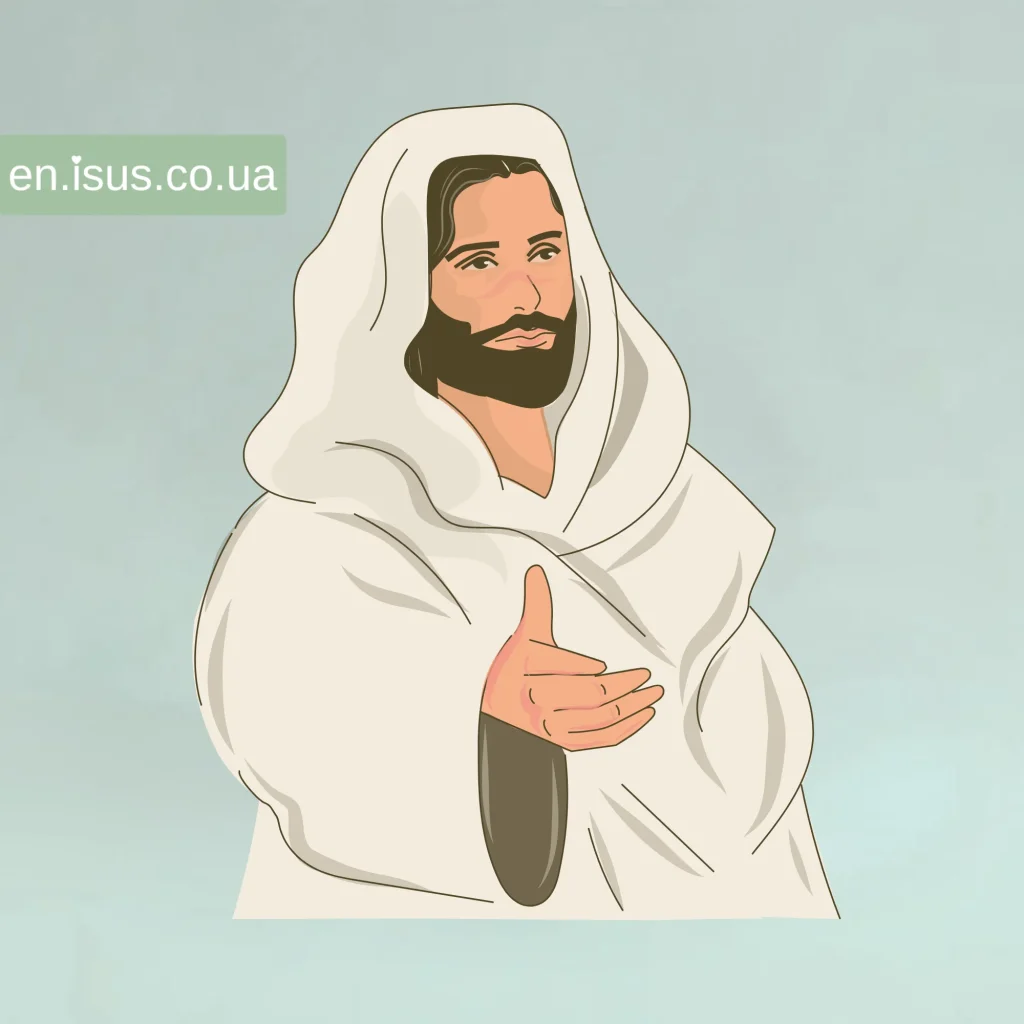
Jesus Christ taught the highest form of love – the kind that expects nothing in return, that covers guilt, lifts the fallen, and heals the wounded.
His teaching is not just advice, but a way of life filled with light, truth, and action.
He didn’t merely speak about love — He lived it.
“Love the Lord your God with all your heart and with all your soul and with all your strength… Love your neighbor as yourself” (Mark 12:30–31) – these words became the heart of Christian ethics.
But Jesus went even further – He called us to love even our enemies and bless those who hurt us.
He showed that true love is not a feeling, but a decision to act for the good of others, even when it costs dearly.
Jesus Christ washed the feet of His disciples, touched lepers, did not avoid sinners, paused for children, and spoke with those whom the world despised.
His kindness was not selective but complete.
He healed, fed, lifted, forgave, and raised – selflessly, without calculation, with a love ❤️ that knows no limits.
His sacrifice on the cross is the greatest act of help humanity has ever witnessed.
He gave His life to save those who could not save themselves.
“For even the Son of Man did not come to be served, but to serve, and to give His life as a ransom for many” (Mark 10:45)
Helping others is not just about being kind.
It is following Jesus.
His path is one of sacrifice, patience, faithfulness, and gentle strength.
And when you reach out your hand to help your neighbor, you are not simply doing good — you are living the way Christ lived.
And that is the highest 🕊️ calling a person can have.
The psychology of mercy: why those who help others are happier

People who regularly help others experience a higher level of life satisfaction.
According to research by Harvard Medical School, volunteers and donors report fewer symptoms of anxiety, depression, and stress.
Helping others activates the same areas of the brain as the feeling of happiness from a pleasant surprise or a warm hug.
This is no coincidence – kindness works like a “vitamin for the soul” 😊
The neurobiology of kindness: how the brain works when we help

When you help others, your body increases the level of oxytocin – the hormone of trust and love.
Brain areas related to reward are also activated, and endorphins – natural painkillers – are released.
This means that acts of kindness literally reduce pain, improve sleep, and stabilize heartbeat.
Kindness is a natural therapy with no side effects 💫
Social examples: why societies where helping is a norm are more resilient

In countries with a high level of social solidarity such as Denmark, Norway, and Canada people show greater trust in one another, cope with crises more effectively, and recover more quickly from shocks.
Helping each other creates a “social safety net.”
For example, during floods or pandemics, it is often neighbors, volunteers, and strangers who save one another not waiting for top-down orders, but acting out of love.
The chain effect: how one good deed sets dozens more in motion

One kind word, a smile, or a simple action can change not just a day, but an entire life.
When you help someone, the one who received help is more likely to help someone else in return.
This has been confirmed by research from Stanford University: every act of kindness increases the likelihood that a witness or recipient of that kindness will perform a good deed the next day.
It’s like a chain of light passed ✨ from heart to heart.
So help with love, as much as you can, guided by your heart.
Every good deed is a drop that can move the ocean.
And you are the one who can start it 🌍💛.
How to begin: simple first steps
Starting to help is not difficult at all.
It doesn’t require large sums of money or superhuman effort.
All you need is a kind heart and the will to act.
Your first steps can be very small, yet they begin to transform the world around you and within you.
Notice who nearby may need support
Pay attention to your immediate surroundings.
Perhaps your elderly neighbors haven’t left their homes for a while, or someone in your family or among your friends is going through grief or illness, or simply feeling lonely.
Even a short conversation or a shared cup of tea can warm more than heaters in winter.
You already have people around you to whom you can offer a piece of warmth ☀️.
Learn to ask: “How can I help?” and truly listen to the answer
This isn’t a rhetorical question.
It requires attention and silence.
To listen means hearing not only the words but also the trembling in someone’s voice, the silences, the unexpected pauses.
Someone might say, “Oh, I don’t need anything.”
But if you sincerely offer support a second or third time, the answer may be different.
Let the person feel that they are not a burden but valued.
Create a “kindness budget”
Helping doesn’t have to be much.
What matters most is constancy, love, and sincerity.
Decide how much time you can devote weekly to good deeds even an hour is already significant.
Also think about what resources you are ready to share: food, clothes, skills, transport, attention.
Make it a habit.
Like a tithe of good works.
Start a journal of kind actions even the smallest ones
| Resource | What you can offer and who it may help |
|---|---|
| 1 hour/week | Talk, read a book, go for a walk – lonely people, children from orphanages, neighbors |
| Old belongings | Neat clothes, shoes, books – aid centers, families in need |
| Knowledge | Explain something, help with homework – children, displaced people, elderly individuals |
| Car or fuel | Give someone a ride, deliver items – volunteer initiatives, hospitals |
Write down at least one action each day through which you made the world a better place.
It can be something small: holding the door open, smiling at a stranger, thanking a cashier, picking up litter from the street.
A kindness journal is like a flashlight 🔦 that reminds you you are already carrying light.
Join an initiative, a project, or a volunteering activity in your community
You don’t have to start alone.
There are already many good people doing something join them.
Ask your local library, school, church, or volunteer center: “How can I be helpful?”
They will guide you.
You’ll find like-minded people and feel how good deeds unite 🌈 hearts 🩵🤍.
Even one kind action today is a step toward a brighter world.
And you can take that step right now.
5 ideas for real acts of kindness (today or sometime this week)
- Bring groceries to an elderly person living alone.
In your building, on a nearby street, or in a nearby village, there’s probably a grandmother or grandfather who, for one reason or another, cannot go shopping themselves.
Buy the essentials bread, grains, milk, vegetables, and household items.
Pack them in a convenient bag 🧺 and deliver it with a smile.
Your warmth will stay with them for a long time. - Build a bird feeder and feed the birds 🐦🐧.
In winter, small birds often die of hunger.
You can easily help.
Make a feeder from a box, a bottle, or wood.
Hang it near a school, your home, or in a yard.
Fill it with sunflower seeds, wheat, or small grains (but not bread, salt, or crackers!).
It can save lives and also set an example for children and friends. - Write a letter or call your parents and ask how you can help.
Even a simple “I was thinking about you” can ease fatigue, heal the heart, and bring strength.
Ask directly: “What do you need today? What can I do for you?”
Maybe they need something delivered, something fixed, help with a device, or just a warm conversation.
Your parents are the most precious people you have. - Spend time with a child who needs attention.
Perhaps there is a child in your family or nearby who feels sad because the adults are always busy.
Offer to do something together: mold clay, read, craft something with your hands, or watch a wholesome cartoon.
In those moments, the child will feel loved and not alone and you will become a source of warmth and light 🌈. - Donate warm clothes or food to a shelter for animals or homeless people.
Look through what you haven’t worn for a long time coats, scarves, blankets.
They can keep someone warm on a cold night.
Add a few cans of food, grains, or pet supplies.
Every city has shelters or volunteers waiting for such help.
One package so much kindness.
Do at least one kind deed and the world will become a little kinder, and your heart a little warmer 💛.
“Should children help their parents?”


Yes, and not only should they – they want to, if they were raised in love ❤️.
Helping parents is not just about duty.
It is a reflection of deep gratitude, inner maturity, and a natural desire to return the warmth once received in childhood.
A child who was loved, who was guided instead of ordered, who was listened to and embraced – grows into an adult who wants to support, not someone who simply “has to” do something.
In Ukrainian family traditions, respect for parents has been passed down from generation to generation.
In both villages and cities, it was customary to care for elders – in work, in daily life, and in illness.
Parents were called “holy people” and “our conscience” – not because they were perfect, but because their investment in their children was considered sacred.
This is important not only morally, but also practically.
By helping their parents, children learn:
- that care is a value, not a burden
- that love is a verb, not just a feeling
- that being responsible is beautiful
How to teach a child to be grateful, not just obligated:
- Thank them even for small acts of help
- Explain why something is being done, not just say “because you must”
- Do good deeds together – not just for each other, but for others too
- Share your joy when receiving support: “It really means a lot to me when you help. It’s so touching 🥰.”
Forms of help may vary – and all are important:
- Household: Taking out the trash, making tea, folding laundry – this is not “children’s work,” it’s the ability to care
- Emotional: A hug, listening, simply being near
- Verbal: Saying “I love you,” “thank you,” “I’m here if you need help.”
- Practical: Helping with devices, going to the pharmacy, paying a bill, providing financial support if possible
Kindness begins at home.
And when children see kindness in their family – it becomes part of their heart.
Should adult children support and help their incapacitated parents?
Moral responsibility: why it’s not a burden, but an honor
Helping parents is about love, not obligation.
It’s an opportunity to give thanks for the sleepless nights, the care, the work, the sacrifices they made for you.
It is an honor – to be there when they need you most.
Even small actions matter: a phone call, bringing medicine, cleaning the yard, or paying the utility bills.
These are the things that warm the heart more than any gifts 🌷.
The role of example: how we treat our parents – our children will treat us the same
Your attitude toward your parents is a living lesson for your children.
They see and remember everything.
If you respectfully help your elderly parents, your children will adopt the same pattern.
The love you sow today will grow 🌱 in how they treat you tomorrow.
Forms of support: financial, organizational, medical, domestic, emotional
Supporting parents does not always mean spending large amounts of money.
Sometimes, it shows in small things – which hold great value.
Here are some practical forms of help:
| Type of Support | Examples |
|---|---|
| Financial | Regular money transfers, payment for medication, utility bills |
| Organizational | Assistance with documents, scheduling doctor appointments, accompaniment to institutions |
| Medical | Purchasing medication, monitoring treatment, calling a doctor |
| Household | Cleaning, grocery delivery, home repairs |
| Emotional | Frequent visits, sincere conversations, emotional support, shared memories |
Living words, a gentle touch, an embrace – these are not small things.
They are exactly what the heart of an elderly person longs for 🕊️.
How to stay balanced and avoid burnout while caring for the elderly
You cannot support others if you are completely drained.
It’s essential not to put your own life on hold entirely, but to lovingly integrate care for your parents into your daily life.
Tips to avoid burnout:
- Delegate responsibilities among family members or involve social services
- Set boundaries: helping doesn’t mean controlling every moment
- Don’t be ashamed to ask for support – even kind people need a hand
- Protect your personal time: prayer, walks, hobbies – this isn’t selfish, it’s your strength
- Focus on the positive: your parents’ gratitude, a smile, small progress – these are gifts that uplift you.
Love is not always easy.
But it is always worth the effort.
Helping your parents isn’t only about them.
It’s about you.
About your heart, your faith, your dignity.
And about a world 🌍 that becomes kinder 💛 – because of you.
Why we should help birds in winter – and how to do it

Facts
With the arrival of frost, most birds face a shortage of food.
Up to 90% of small birds cannot survive the winter without human help.
The most vulnerable are tits, sparrows, bullfinches, and nuthatches.
The reason is the lack of available natural food, short daylight hours, and frostbite.
It is especially difficult during periods of snowfall, ice, and temperatures below -10°C.
Ecosystem
Birds are our natural allies.
They feed on pests in gardens and fields, spread plant seeds, and take part in pollination.
A decline in bird populations leads to ecological imbalance: pests multiply rapidly, certain plant species disappear, and soil fertility weakens.
Caring for birds in winter means caring for the harvest in spring.
A kind and meaningful activity for children and families


Feeding birds 🐧 is a perfect example of hands-on ecological education for children.
It fosters empathy, responsibility, and love for God’s creation.
Making a bird feeder together and watching feathered visitors creates warm family moments that stay in the heart forever.
Ideas for helping
Helping birds in winter is easy if you know how.
Here are a few proven ways:
- Hang a feeder in a garden, park, or on a balcony
- Regularly refill it with food and keep it clean
- Provide access to water (use a bowl with warm water and refresh it regularly)
- Watch and record which bird species visit it’s fun and educational
Making feeders from everyday materials
No need to buy one make it together with children 🧑🧑🧒🧒
Here are three simple options:
| Material | Instructions + Benefits |
|---|---|
| Plastic bottle | Cut openings, insert wooden spoons, hang it up. Cheap, fast, convenient. |
| Juice carton | Cut a window, insert a stick. Found in every home. |
| Milk carton | Decorate together, add a roof. Perfect for kids’ creativity 🖍 |
Important: Hang the bird feeder at least 1.5 meters above the ground, far from cats on a window or tree.
What to feed and what not to
✅ Healthy foods for birds:
- Raw (unsalted) sunflower or pumpkin seeds
- Fresh unsalted lard
- Rolled oats
- Raw nuts (unsalted, unroasted)
- Dried berries (rowan, viburnum, raisins)
- Raw millet
- Fat-rich seeds from wild plants
❌ Harmful or dangerous:
- Black bread (causes fermentation in the stomach)
- Salty, fried, or smoked foods
- Cooked grains
- Foods with spices or seasoning
- Potatoes or rice
Feeding in one place – how it affects bird survival
Birds quickly get used to a stable food source.
If you start feeding them continue daily at least until March 🌨.
If the feeder is empty for several days, they may not find another source in time and could die.
Consistency is the key to saving lives.
Also: don’t forget to clean out old food and wash the feeder regularly.
This helps prevent the spread of diseases among birds.
Your kind actions bring not only warmth in the cold but hope for spring 🌸.
Your love 🤍 can save hundreds of tiny hearts singing about life.
Thank you for caring.
Why it’s important to help your parents (even if they don’t ask)
True kindness is invisible: help through small things
Help doesn’t always look like a heroic act.
Often it’s quiet, gentle, and natural.
Water the plants, take out the trash, buy their favorite jam they once bought for you as a child.
Ask if something needs fixing.
Hug them for no reason.
Real love doesn’t shout it acts.
Why parents may be afraid to ask for help
A mother or father might stay silent about their fatigue, pain, or loneliness.
They may feel embarrassed to admit they’re struggling, thinking they’re “strong enough,” “shouldn’t burden their children.”
They might not say it outright, but a caring son or daughter will hear it in their voice, see it in their eyes, or feel it in the long pause after “How are you?”
That’s why it’s important to see beyond words.
And take the first step.
How to show care with dignity – without lecturing
Care should be gentle.
Not from the position of “Now I’m responsible for you,” but with love: “I’m here.”
Avoid phrases like “I told you so,” or “Why again…?”
Instead, say: “I can help,” “Let’s do it together,” “I hear you.”
Respect their independence even if they’re elderly.
Dignified help means adding support, not taking away autonomy 🎗️.
Words of Support That Warm the Heart
Here are a few phrases that can bring genuine joy to parents:
• “I’m here with you”
• “I’m so grateful for everything you’ve done for me”
• “It matters to me how you’re feeling”
• “You are valuable to me not for anything you’ve done, but just because”
• “I love you. Deeply.”
These words don’t need a special occasion.
They’re always needed especially when parents are silent or pretend that everything is fine.
A Biblical example: “Honor your father and your mother…”
This commandment is one of the Ten Commandments, and it never loses its power.
To honor doesn’t just mean to show respect.
It means care, presence, listening, and recognizing their worth.
It means your actions say: “You matter to me.”
This is a spiritual duty not a burden, but a blessing.
By helping your parents, you yourself become brighter.
And you pass this on to your children, your grandchildren not just as an example, but as a way of living with love.
Why we must help animals
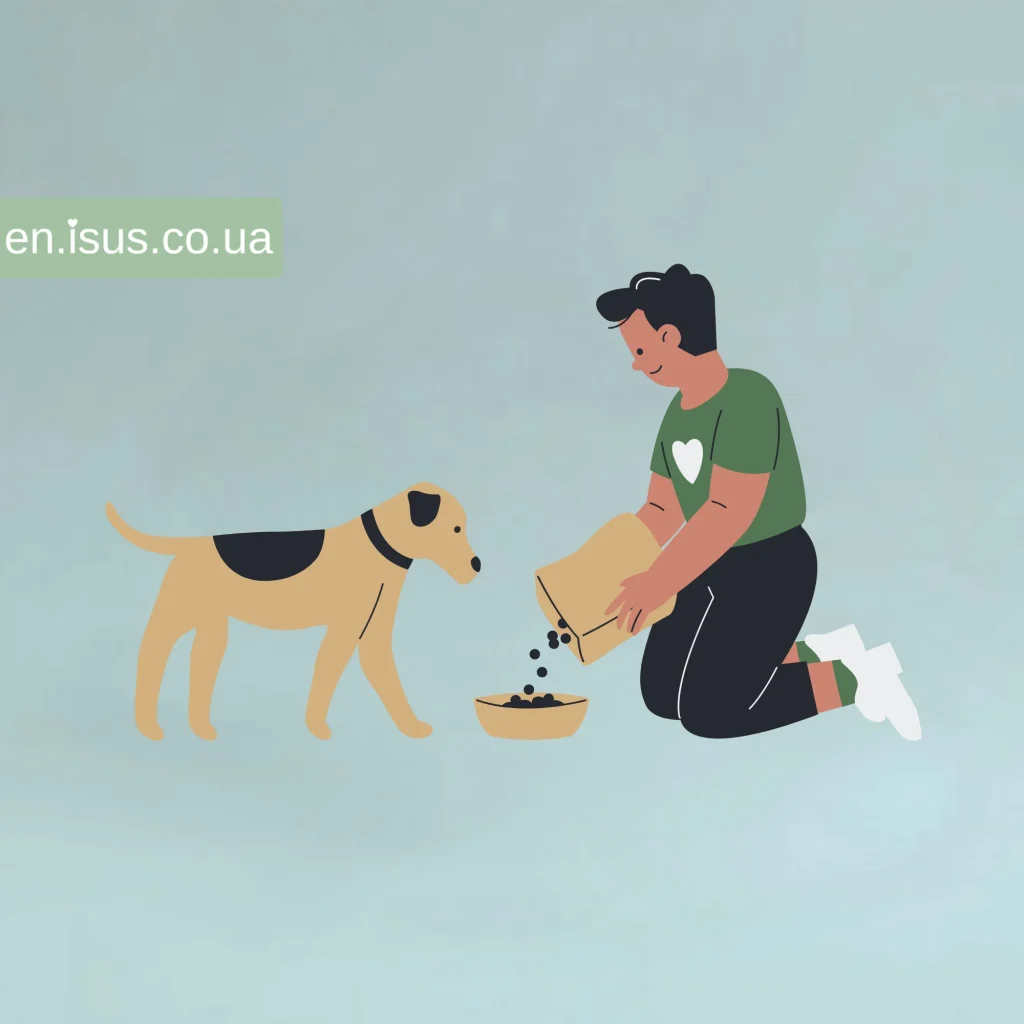

Empathy for the Vulnerable – the Foundation of Humanity
Animals cannot protect themselves, especially when they are left without a home, food, or care.
Helping animals is not just a kind act it is a sign of a mature and compassionate heart.
A person who can feel for a trembling kitten in the rain, or a dog looking trustingly into their eyes, is already making the world 🌍 a better place 👌.
The Condition of Animals Reflects the Morality of Society
Where animals are ignored, people are often treated with a lack of respect as well.
Our attitude toward the defenseless speaks volumes about our dignity.
Cities that support sterilization programs, provide feeders, and maintain shelters are cities that love life in all its forms.
How Helping Animals Shapes a Child’s Character
When you involve a child in feeding stray animals or caring for a pet, you are teaching responsibility, kindness, and consistency.
A child learns to empathize, recognize the needs of others, and stand up for the vulnerable.
These are the qualities that form the foundation of a happy and strong 💪 personality.
Ways to Help
You don’t have to give money to make a difference.
There are many simple and effective ways to help:
- Finding homes for street animals. Even if you can’t take one in yourself, help find a home—through social media, friends, or shelters.
- Volunteering at shelters. They always need help: walking dogs, cleaning cages, bringing food or medicine.
- Sharing stories of animals in need of a home. Every share is a chance at a better life for a homeless 🐾 animal.
Helping animals is a quiet but deeply meaningful act of love.
It asks for nothing in return, but gives immense joy.
If you ever save an animal’s life, its trust, its gaze, its gratitude will stay with you forever 🐶🐱💖.
Why We Must Help Adults
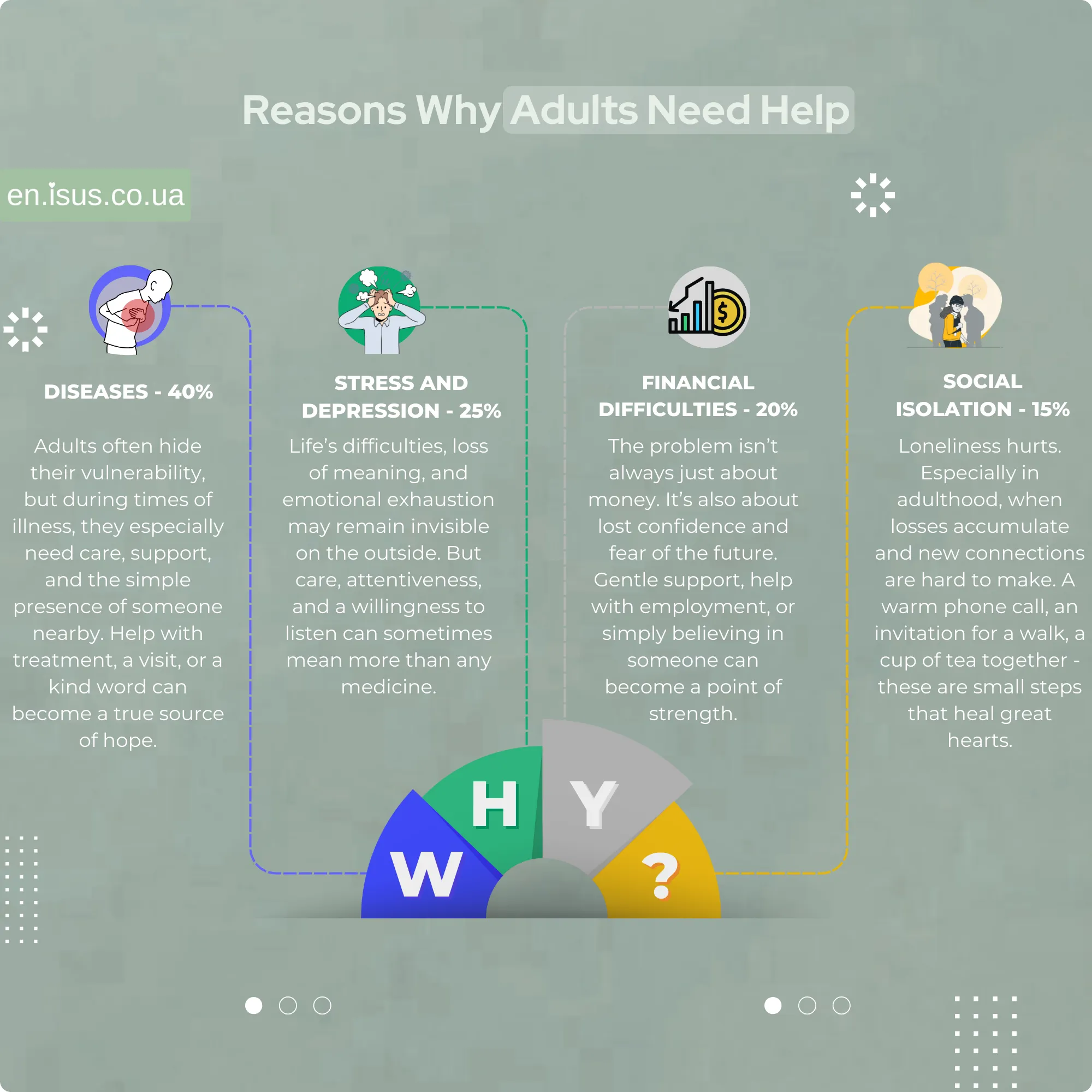
Adults can be vulnerable too: fatigue, illness, depression
Help is not only for children, the elderly, or animals.
Adults can be just as vulnerable.
They may not show their struggles, but that doesn’t mean things are easy for them.
Behind a smile, there are often sleepless nights, physical pain, emotional burnout, or care for someone else.
If a person is working, raising children, or taking care of parents, they can become physically and emotionally exhausted.
Every adult needs warmth, sincerity, and a simple question: “How are you feeling?”
But even without words, offering someone tea, holding the door, giving a ride, or just quietly being there – is already support.
That’s how true humanity is born.
We all, at times, need a shoulder nearby – and that’s okay
No one should have to be strong all the time.
That’s a myth that exhausts and destroys.
Everyone has moments when they long for someone to say, “I’m with you.”
And for it to feel real – not like a formality, but genuine presence.
If you can be there for someone during such a moment – that’s not just a good deed.
It’s a gift.
When we show compassion, we heal ourselves.
Helping others strengthens our inner support, brings a sense of connection, meaning, and warmth.
It’s the best antidepressant.
How to show care at work, in line, on public transport 🚌
In daily life, there are countless small but meaningful ways to help:
- At work: offer a colleague coffee, help with a task, speak up in a conversation if someone is under pressure
- In line: give up your place to someone who looks tired or is with a child
- In transport: hold the door, offer your seat, help lift a heavy bag
- On the street: offer kind words if you see someone lost or in a conversation that may break them emotionally
Small gestures matter greatly.
You never know what someone else is going through.
But your action may become the best moment 🙂 of their day.
Help without humiliation = respect + action
True help is not about making someone feel guilty or indebted.
It’s about dignity.
If you want to help – do it respectfully, gently, and with love.
Don’t remind them about it, don’t expect “payback,” don’t try to control.
There’s a simple rule: help should be quiet, but powerful.
Don’t ask, “Why couldn’t you manage on your own?” – say, “I’m here.”
Don’t analyze someone’s mistakes – just support them.
Your action + a sincere heart = true support 🤍.
The world needs kindness.
But even more – it needs kind people who take action.
Not tomorrow, not “when there’s time,” but today.
Adults, just like children, want love.
And we can be the light that restores their faith in goodness.
Why We Should Help the Weaker Ones
Strength lies not in dominance, but in protection
True strength is not shown by oppressing others, but by being able to protect those who are weaker.
A person who is confident in themselves does not belittle, insult, or laugh at others.
They extend a hand of support.
When you help someone weaker, you build a space of safety, trust, and love around you.
This is the deep meaning of humanity.
Why strong people help, and weak ones bully
Bullying, mockery, and aggression are signs of inner weakness, insecurity, and fear.
A person who is strong – spiritually, emotionally, and morally – will never allow themselves to humiliate another.
Instead, they will stand beside them, offer support, and protect them.
That is why teachers, parents, and mentors should first of all raise children not with the desire to “be the best,” but with the desire to “be kind.”
How to teach a child not to mock, but to support
The best method is personal example.
If a child sees that you:
- treat everyone with respect, regardless of age, abilities, or appearance
- help those who are struggling
- do not laugh at others’ misfortunes
- explain that “mockery causes pain”
They absorb this behavior as normal.
It’s important not to punish a child for teasing, but gently explain that behind every person is a heart that can hurt.
Real-life examples: support at school, in sports, in children’s groups
- In class, a boy reads more slowly than the others. A friend helps him practice at home. A month later, they participate together in a school competition 🏆
- A girl in a wheelchair joins a sports training. The coach organizes the exercises so she can participate equally. The team becomes even more united 🤝
- In a younger group, one child is shy and afraid to perform. An older participant becomes their “angel of support” and quietly whispers the needed words. This grows not just courage, but friendship 🧒👶
The role of media, films, and books in developing empathy
The content children consume directly shapes their understanding of good and evil.
Choose movies where heroes rescue, befriend, and help each other.
We recommend:
- “Pollyanna” – a book about the power of kind deeds
- “Hachiko” – a film about loyalty and love
- “Up” – an animated movie about friendship, support, and care
- “Coco” – about memory, family, and sensitivity
These stories plant seeds of goodness in the heart, which grow into real actions.
If you read 📖 and watch 🎬 them together with children and discuss them – you become a sower of love.
Goodness begins with a look.
With quiet beside someone.
With gentle support.
You can be the one who protects, not oppresses.
And in this lies the greatness, joy, and light of true strength 💪
How Not to Burn Out While Helping
The “Rescuer Syndrome” – what it is and how to avoid it
“Rescuer syndrome” occurs when you unconsciously take responsibility for other people’s lives, feelings, and problems.
You feel that others can’t cope without you.
You give too much – your energy, emotions, time, money – even when you’re already exhausted.
This is dangerous 😔
Consequences include:
- chronic fatigue, apathy
- irritation toward those you help
- loss of interest in life
- a deep sense of being used
To avoid this:
- Clearly define your limits: know where your help ends
- Ask yourself: “Is this really my responsibility?”
- Accept that you are not the Savior of the world – only God is
- Set aside time for yourself every day – it’s not selfishness, it’s love for life 💚
The “Airplane Mask Rule”: first for yourself, then for others
This aviation rule is one of the most important and human.
If you can’t breathe, you can’t help the child beside you.
If you are exhausted – your help becomes weak, or even harmful and intrusive.
In everyday life, this means:
- Listen to your body: tiredness is a signal, not weakness
- Allow yourself to rest – not just on vacation
- Eat, sleep, pray 🙏, breathe deeply
- Create a personal space of quiet, where you can recharge.
Why Help Should Come from Love, Not Guilt
True help comes when you want to, not when you have to.
Guilt leads to burnout and frustration.
Love, on the contrary, gives strength.
If something pushes you to help, but inside you feel pain – pause.
Signs your help is from love:
- You feel peace, even when it’s hard
- You don’t expect thanks, but are grateful yourself
- You don’t blame others – you choose light.
Ask yourself: “Is this act from love? Or from duty, fear, or guilt?”
If it’s the second – hug yourself and allow yourself to rest.
Caring for yourself is also an act of love

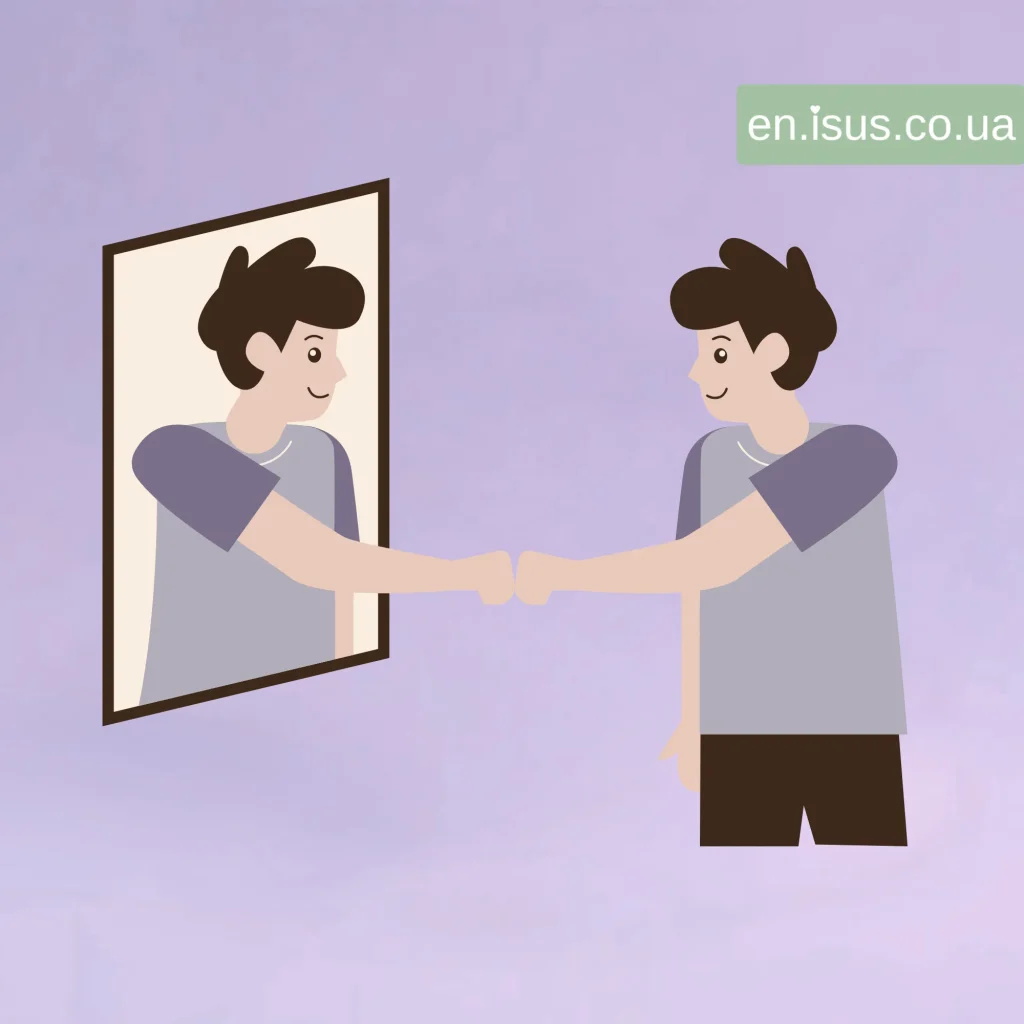
Self-care is not a luxury, it’s a foundation.
A person who doesn’t care for themselves won’t be able to care for others for long.
You are a garden where goodness grows.
Water this garden 🌸.
Simple steps:
- Organize your day: include silence, prayer, and fresh air
- Keep a joy journal: write down three good things each day
- Care for your body – it is your instrument of love
- Speak words of encouragement to yourself: “I matter. I also need warmth.”
Remember, even Jesus withdrew into silence to restore His strength.
If the Son of God Himself needed rest, then you absolutely have the sacred right to it too.
Give love – not from emptiness, but from fullness ❤️.
Conclusion: helping is truly living
Anyone can brighten someone’s day
Helping isn’t always about grand gestures.
Sometimes a smile 😀, a kind word, a warm look, or a cup of tea is enough to ignite warmth in another’s heart.
You might be the very person who makes someone’s day better.
That is an incredibly powerful thing 💪.
Remember, every good deed matters:
- Give up your seat on the bus
- Hold the door open
- Send a message: “I’m thinking of you”
- Offer a hug
- Share something tasty
- Give helpful advice
- Solve a specific problem
These little things change lives – daily, quietly, but deeply.
Good deeds create an atmosphere of safety, trust, and love.
Goodness always returns
No act of kindness ever goes to waste.
It’s not a promise of quick reward, but a calm certainty: every seed of goodness will grow.
At the most unexpected moment, you will receive support when you need it most.
That’s how the law of reciprocity works.
Facts:
- Harvard research shows that people who are generous with support have higher life satisfaction and lower rates of depression
- In communities where mutual help is common, crime, loneliness, and stress levels are lower
- Children raised in kind environments develop better empathy, responsibility, and inner stability
Helping is an investment in the future: your own, your children’s, and society’s.
It is the foundation of a worthy and bright world 🌎.
Your help is someone’s light ☀️ in the dark.
In moments when someone feels abandoned, insignificant, or exhausted, even the smallest act of support can be a true light for them.
And you – you are the one who can light that flame.
Just one word, gesture, or step from you can give someone the strength to live on, believe in themselves, endure pain.
In a world full of pain and anxiety, your kindness is like a warm blanket in winter, a ray of sunshine on a cloudy day, a quiet song in the heart.
You can be the answer to someone’s prayer.
You can be a role model for a child.
You can pass on the kindness you once received yourself.
That’s what real life is – filled with love, gentleness, and goodness.
So live with an open heart.
Help.
Listen.
See.
Support.
And know – you are already changing the world 🌍❤️✨.
Appendix
Quotes & Inspiration: wise thoughts from great people
These quotes can be a source of light for your heart, inspiration for daily acts of kindness, and a gentle reminder of the power of love.
- “We cannot all do great things. But we can do small things with great love.” – Mother Teresa
- “Service to others is the rent you pay for your room here on Earth.” – Muhammad Ali
- “True generosity is giving without expecting anything in return, not even gratitude.” – Kahlil Gibran
- “Hands that help are holier than lips that pray.” – Sathya Sai Baba
- “The greatest joy in the world is to make someone else happy.” – Helen Keller
- “A kind word is already grace. A smile is already a gift. Even silence – when filled with love – is already support.” – Larisa Shepitko
- “The more we give to others, the richer we become in heart.” – John Templeton
- “Love is not an emotion. Love is action.” – José Mujica
📌 Print your favorite quote and stick it on your fridge or desk. A daily reminder of kindness plants little miracles in your heart 💛.
✨ And may every kind word and deed grow like a seed sown in good soil 🌱.